
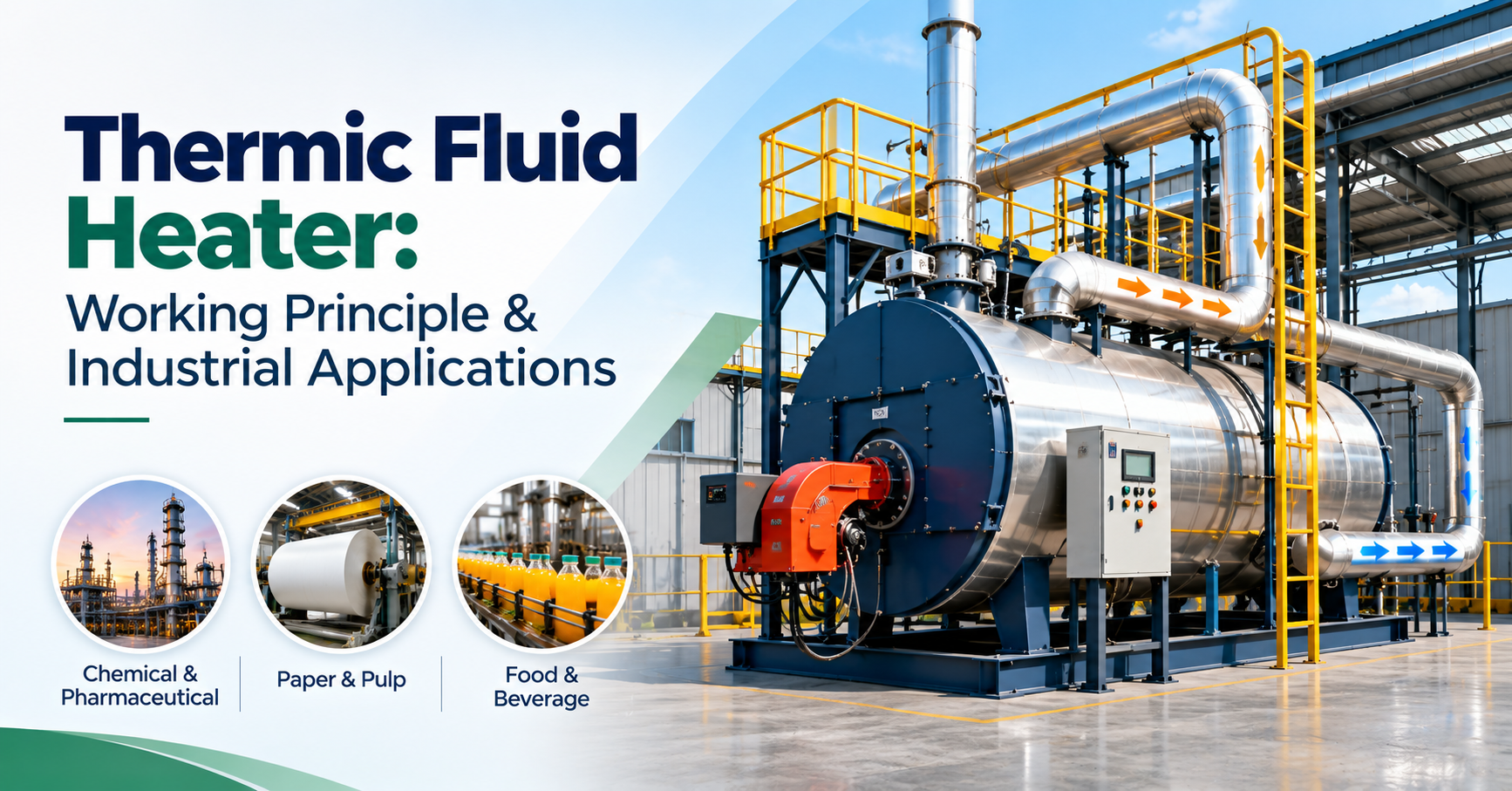
Industries that require consistent and controlled heating often depend on specialised thermal systems to maintain their production processes. A thermic fluid heater is one such industrial heating solution that transfers heat using a circulating liquid instead of generating steam as the primary heating medium.
These systems are used in manufacturing and processing applications where controlled indirect heating is required. Understanding the thermic fluid heater working principle, its components, applications and advantages helps industries identify whether this technology is suitable for their process requirements.
Businesses looking for reliable industrial heating and energy solutions can explore Industrial Boiler Manufacturers in India to understand DAACK Vessels' expertise in industrial boilers, process heating and energy systems.
What Is a Thermic Fluid Heater?
A thermic fluid heater is an industrial heating system that uses a specialised heat-transfer fluid, commonly called thermal oil, to transfer heat from a heating source to industrial equipment or processes.
Unlike conventional steam boilers, which use water to generate steam, a thermic fluid heating system circulates heated liquid through a closed-loop arrangement. The fluid absorbs heat inside the heater and transfers it to the process equipment through a heat exchanger or heating circuit.
Thermic fluid heaters are used in industrial applications that require controlled and consistent indirect heating.
They are commonly considered for:
Chemical and pharmaceutical manufacturing
Textile processing
Food processing
Oil and petrochemical applications
Industrial drying systems
Manufacturing processes requiring indirect heating
Industries can explore DAACK Vessels' thermic fluid heater solutions for customised industrial process heating requirements.
How Does a Thermic Fluid Heater Work?
A thermic fluid heater works by heating a thermal fluid and continuously circulating it through a closed-loop system to transfer energy to the required industrial process.
The general operating process involves the following stages:
1. Fluid Circulation
A circulation pump moves the thermic fluid through the heating system. The fluid travels through the heater, where it receives thermal energy from the heat source.
2. Fluid Heating
Inside the heater, the thermal fluid absorbs heat through the heating surfaces. The heating source may vary depending on the heater design and fuel configuration.
3. Heat Transfer to the Process
The heated fluid moves through pipelines towards the process equipment. It transfers thermal energy through heating coils, jackets or heat exchangers, depending on the application.
4. Return Circulation
After transferring heat, the fluid returns to the heater at a lower temperature. It is reheated and circulated again to maintain the required process temperature.
This continuous circulation allows the system to provide indirect heating to industrial operations.
Thermic Fluid Heater Working Principle
The thermic fluid heater working principle is based on heat transfer through a circulating liquid in a closed-loop system.
The thermal fluid absorbs energy from the heater and carries it to the process equipment. Heat is transferred through an indirect heating arrangement without requiring the fluid to come into direct contact with the material being processed.
The main operating stages are:
Heat generation through the selected heating source.
Absorption of thermal energy by the circulating fluid.
Transportation of heated fluid through the distribution network.
Transfer of heat to the industrial process.
Return of the cooled fluid to the heater for reheating.
The fluid's operating temperature, flow rate and thermal properties influence the system's heat-transfer performance. These parameters must be selected according to the process requirements and equipment design.
Main Components of a Thermic Fluid Heating System
A thermic fluid heating system consists of several components that work together to provide controlled heat transfer.
1. Heater Unit: The main equipment where the thermic fluid receives thermal energy from the heating source.
2. Circulation Pump: Maintains the required fluid flow through the heater and process circuit.
3. Expansion Tank: Accommodates changes in fluid volume caused by temperature variations within the system.
4. Thermic Fluid Piping: Transfers heated fluid from the heater to the process equipment and returns it for reheating.
5. Heat Exchanger: Transfers thermal energy from the circulating fluid to the process or another medium, depending on the application.
6. Temperature and Pressure Instruments: Help operators monitor system conditions and maintain operation within the designed limits.
7. Control and Safety Systems: Support temperature regulation, monitoring and protective functions during operation.
The actual components and configuration depend on the heater design and industrial application.
Types of Thermic Fluid Heaters
Thermic fluid heaters can be classified according to their heating source, fuel configuration and design.
Common categories include:
1. Oil-Fired Thermic Fluid Heaters
These systems use liquid fuel as the heat source. They may be considered for industrial facilities where suitable liquid-fuel infrastructure is available.
2. Gas-Fired Thermic Fluid Heaters
Gas-fired systems use gaseous fuel to generate the heat required for thermal fluid circulation. Their suitability depends on fuel availability, operating requirements and heater design.
3. Solid-Fuel-Fired Thermic Fluid Heaters
These systems use suitable solid fuels as the heating source. Fuel characteristics, combustion arrangements and ash-management requirements are important design considerations.
4. Electrically Heated Thermic Fluid Systems
Electric heating systems use electrical energy to heat the circulating fluid. Their suitability depends on the required heating capacity, electricity availability and operating economics.
The appropriate thermic fluid heater configuration should be selected based on the process temperature, heating demand, fuel availability and operating conditions.
Industrial Applications of Thermic Fluid Heaters
Thermic fluid heaters support various industrial processes that require controlled indirect heating.
1. Textile Industry
Textile manufacturing involves processes such as drying, finishing and other operations that may require controlled thermal energy. Thermic fluid heating systems can support suitable process-heating applications.
2. Chemical Industry
Chemical manufacturing operations may require controlled heating for reactors, vessels and processing equipment. Thermal oil systems can transfer heat indirectly according to the process requirements.
3. Pharmaceutical Industry
Certain pharmaceutical manufacturing processes require controlled heating of equipment and materials. Thermic fluid systems may be considered where indirect process heating is suitable.
4. Food Processing Industry
Food manufacturing facilities use heating for different processing operations. Thermic fluid systems can provide heat to suitable equipment through indirect heating arrangements.
5. Oil and Petrochemical Industry
Industrial operations involving heating of process equipment, vessels and other systems may use thermal oil heating depending on the required operating conditions.
6. Industrial Manufacturing
Manufacturing facilities with specialised heating requirements may use thermic fluid heaters for drying, heating and other process applications.
For industries evaluating integrated heating requirements, DAACK Vessels also provides Boilers & Process Heating Equipment for industrial process applications.
Advantages of Using a Thermic Fluid Heater
Thermic fluid heaters offer several operational advantages when appropriately designed and maintained.
Indirect heat transfer: The circulating fluid transfers energy to process equipment without direct contact with the material being heated.
Controlled process heating: Temperature control can be configured according to the requirements of the industrial application.
Closed-loop circulation: The fluid circulates through a defined system and can be reused during normal operation.
Flexible industrial applications: These systems can support different manufacturing and processing requirements.
Process integration: Thermic fluid systems can be integrated with suitable heating coils, jackets and heat exchangers.
Application-specific configuration: Heater capacity, fuel arrangement and circulation requirements can be designed around the process.
Actual performance and efficiency depend on heater design, fluid selection, insulation, operating conditions and maintenance practices.
Thermic Fluid Heater vs Steam Boiler: What Is the Difference?
Both systems provide industrial heat, but they use different heat-transfer methods.
Parameter | Thermic Fluid Heater | Steam Boiler |
Heating medium | Thermal fluid | Water and steam |
Heat transfer | Circulating liquid | Steam |
System arrangement | Closed-loop fluid circulation | Steam generation and distribution |
Main application | Indirect process heating | Process steam and heating |
Return system | Heated fluid returns for reheating | Condensate may be returned to the boiler system |
Selection basis | Process temperature and heat-transfer requirements | Steam pressure, capacity and process demand |
The choice depends on the required heating method, process conditions, equipment configuration and overall plant requirements.
Factors to Consider When Selecting an Industrial Thermic Fluid Heater
Selecting the right industrial thermic fluid heater requires an assessment of the facility's heating requirements.
Consider these important factors:
Process temperature: Identify the required operating and maximum design temperatures.
Heating capacity: Determine the thermal energy demand of the process.
Heat-transfer fluid: Select a suitable fluid based on operating temperature and compatibility.
Fuel availability: Evaluate available fuel options and their operating costs.
Circulation requirements: Determine the required fluid flow rate and system pressure drop.
Equipment configuration: Assess the heating circuit, heat exchangers and process integration requirements.
Safety and maintenance: Consider instrumentation, protective systems, inspection and maintenance requirements.
A detailed engineering assessment helps ensure that the heating system matches the facility's operating requirements.
Conclusion
A thermic fluid heater is an important industrial heating solution for processes requiring controlled indirect heat transfer. By circulating thermal oil or another suitable heat-transfer fluid through a closed-loop system, it supplies thermal energy to different types of industrial equipment and applications.
Understanding the thermic fluid heater working principle, components, types and applications helps industries evaluate the right heating arrangement for their operations.
DAACK Vessels provides customised thermic fluid heating solutions designed around industrial process requirements. Explore its industrial boiler efficiency solutions to learn more about improving thermal-energy utilisation across industrial operations.

Frequently Asked Questions
1. What is a thermic fluid heater used for?
A thermic fluid heater is used to provide indirect heat for industrial processes through a circulating thermal fluid. It is commonly considered for textile, chemical, pharmaceutical, food-processing and manufacturing applications.
2. How does a thermic fluid heater work?
It heats a specialised thermal fluid and circulates it through a closed-loop system. The heated fluid transfers energy to process equipment and returns to the heater for reheating.
3. What fluid is used in a thermic fluid heater?
Thermal oil and other specialised heat-transfer fluids may be used. The selection depends on the operating temperature, fluid properties, compatibility and equipment manufacturer's recommendations.
4. What are the main advantages of a thermic fluid heater?
Its advantages include indirect heat transfer, controlled process heating, closed-loop fluid circulation and suitability for different industrial heating applications.
5. What is the difference between a thermic fluid heater and a steam boiler?
A thermic fluid heater circulates heated liquid to transfer thermal energy, whereas a steam boiler heats water to generate steam. The appropriate system depends on the process's heating and steam requirements.