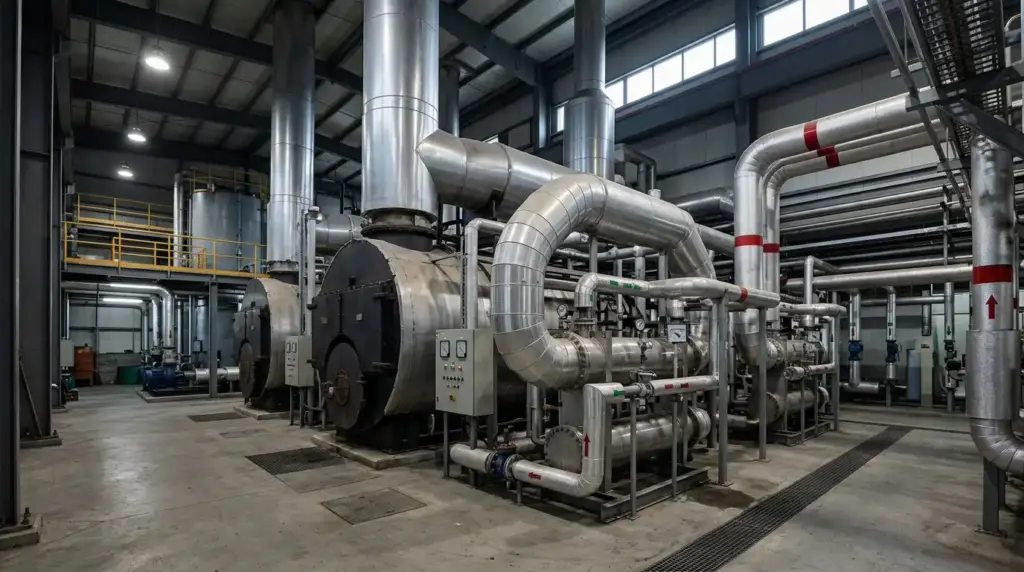
Industrial Boiler and Process Heating Solutions for Cement & Heavy Industries
Cement manufacturing and other heavy industrial operations require reliable thermal energy systems to support continuous production, process heating and energy management. From auxiliary steam requirements to recovering heat from high-temperature industrial processes, the right boiler and heating solutions can contribute to improved plant efficiency and more effective energy utilisation.
DAACK Vessels provides industrial boiler and process heating solutions designed around industrial operating requirements. Our areas of focus include industrial steam generation, process heating systems and waste heat recovery solutions that help industries evaluate opportunities to optimise thermal energy consumption.
Industrial Thermal Energy Requirements in Cement and Heavy Industries
Cement plants and heavy industrial facilities operate under demanding production conditions. High-temperature processes, continuous operating schedules and significant energy requirements make thermal system planning an important part of overall plant performance.
Depending on the industry and manufacturing process, thermal energy may be required for:
Process heating: Supplying controlled heat for industrial processes and production equipment.
Steam generation: Providing steam for auxiliary applications and plant utility requirements.
Waste heat utilisation: Recovering usable energy from suitable high-temperature exhaust streams.
Power generation: Evaluating opportunities to convert recovered thermal energy into electricity.
Energy optimisation: Improving how heat and steam are generated, distributed and consumed across the facility.
A properly evaluated thermal system can help industries manage energy requirements while supporting reliable production operations.
Industrial Boiler Solutions for Cement Plants
Cement manufacturing involves energy-intensive operations, including raw material preparation, clinker production, cooling and cement grinding. While the kiln is central to the manufacturing process, supporting utilities and thermal systems also contribute to overall plant operations.
Industrial boilers and associated steam systems can support applications where process steam or auxiliary heating is required.
Steam Generation for Industrial Applications
Industrial steam systems provide thermal energy for suitable plant utility and process applications. Boiler selection should consider the required steam output, operating pressure, temperature, load profile and available utilities.
Auxiliary Process Heating
Certain plant operations require controlled thermal energy beyond the primary kiln process. The heating system must be selected according to the specific process temperature, heat-transfer method and operating conditions.
Waste Heat Recovery in Cement Plants
Cement manufacturing generates high-temperature exhaust streams, including gases from the preheater and air from the clinker cooler. Depending on their temperature, flow rate, dust loading and operating profile, these streams may offer opportunities for waste heat recovery.
A waste heat recovery boiler can capture thermal energy from suitable exhaust gases and transfer it to water to generate steam. The recovered steam may be used in an appropriate process or integrated with a steam turbine-generator system for power generation, subject to a technical and economic feasibility assessment.
For cement plants evaluating a waste heat recovery boiler, important considerations include:
Available exhaust gas temperature and flow rate
Gas composition and particulate loading
Heat recovery potential across operating conditions
Allowable pressure drop in the exhaust gas system
Steam pressure and temperature requirements
Integration with existing plant utilities and power systems
The actual recovery potential depends on the plant's heat balance and system design. A site-specific assessment is essential before estimating steam output, power generation or financial savings.
Industrial Heat Recovery Systems for Heavy Industries
Waste heat recovery is relevant to several energy-intensive industries where hot exhaust gases or process streams may contain recoverable thermal energy.
An appropriately designed industrial heat recovery system can help reduce the amount of useful energy lost through exhaust streams and improve overall energy utilisation.
Potential applications for assessment include:
Cement and Clinker Manufacturing
Preheater exhaust gases and clinker cooler air can be evaluated as potential heat sources for waste heat recovery, depending on plant conditions.
Steel and Metal Processing
High-temperature industrial operations may produce exhaust heat that can be assessed for suitable heat recovery applications.
Mineral and Construction Material Processing
Certain drying, heating and material-processing operations generate waste heat that may be suitable for recovery and reuse.
Other Heavy Industrial Processes
Industries with continuous high-temperature operations can evaluate heat recovery opportunities based on their process configuration, exhaust characteristics and energy demand.
The suitability of a waste heat recovery system depends on the available heat source, operating conditions and intended use of the recovered energy.
Process Heating and Steam Systems for Heavy Industries
Different industrial processes require different methods of heat transfer. Choosing between steam-based heating, indirect process heating and heat recovery depends on the temperature requirements, production cycle and application.
DAACK's industrial boiler and process heating solutions can be evaluated for requirements such as:
Industrial steam generation
Process heating applications
Thermal energy management
Waste heat recovery
Steam and power integration, where technically suitable
A well-planned system should consider not only the heat-generation equipment but also steam distribution, pressure management, condensate recovery and the overall operating requirements of the facility.
How to Select the Right Boiler or Waste Heat Recovery System
Selecting an industrial boiler or waste heat recovery solution requires a detailed understanding of the plant's operating conditions. Equipment should be matched to the actual process requirement rather than selected on capacity alone.
Consider the following factors before finalising a system:
1. Process and Energy Requirements
Identify whether the plant requires process steam, auxiliary heating, recovered heat or power generation. Define the intended application and expected operating schedule.
2. Required Steam Capacity and Operating Pressure
For steam-based applications, establish the required steam generation capacity, pressure, temperature and load variation.
3. Available Waste Heat Sources
For waste heat recovery projects, evaluate exhaust gas temperature, flow rate, composition, dust content and the consistency of heat availability.
4. Existing Plant Configuration
Assess available space, ducting arrangements, utility connections and the possibility of integrating the proposed system with existing plant infrastructure.
5. Energy Efficiency and Operating Economics
Evaluate the expected energy recovery, auxiliary power consumption, maintenance requirements and overall project economics. A feasibility study should establish realistic performance expectations.
6. Environmental and Operating Requirements
Consider applicable emission requirements, plant operating conditions, safety requirements and the maintenance access needed for long-term operation.
Why Consider DAACK Vessels for Industrial Thermal Solutions?
Industrial thermal systems must be aligned with the plant's process requirements, operating conditions and energy objectives. DAACK Vessels focuses on industrial boiler and process heating solutions for manufacturing and process industries.
When evaluating a thermal energy requirement, key considerations include:
Industrial application focus: Solutions considered around process heating and steam generation requirements.
Waste heat recovery: Opportunities to evaluate usable heat from suitable industrial exhaust streams.
Integrated energy perspective: Consideration of steam generation, distribution and energy utilisation.
Application-based planning: System requirements assessed in relation to process conditions and operating objectives.
Project-specific requirements: Technical discussions based on the plant's capacity, operating profile and intended application.
The right solution depends on the technical requirements of each facility. DAACK can discuss your project requirements and help identify the relevant industrial thermal solution.
Discuss Your Cement Plant or Heavy Industry Requirements with DAACK Vessels
Looking for industrial boilers, process heating equipment or waste heat recovery solutions for your facility?
Share your plant's application, operating requirements and energy objectives with DAACK Vessels. Our team can discuss the technical requirements and help identify a suitable direction for your industrial thermal energy project.
Contact DAACK Vessels to discuss your project requirements.
What type of boiler is used in the cement industry?
Industrial boilers may be used in cement plants for auxiliary steam generation and suitable process heating applications. The boiler type depends on the required steam capacity, pressure, temperature, operating conditions and intended use.
What is a waste heat recovery boiler in a cement plant?
A waste heat recovery boiler captures thermal energy from suitable hot exhaust gases and uses it to generate steam. In cement plants, potential heat sources include preheater exhaust gases and clinker cooler air. The recovered steam may support plant utilities or power generation through a suitable turbine-generator arrangement.
How does waste heat recovery improve cement plant energy efficiency?
Waste heat recovery can reduce the amount of thermal energy lost through exhaust streams. When integrated appropriately, the recovered energy can be used to generate steam or electricity, helping reduce dependence on other energy sources. Actual savings depend on plant conditions and system performance.
What factors affect the design of a cement plant waste heat recovery system?
Important factors include exhaust gas temperature, gas flow rate, dust concentration, gas composition, operating hours, available space, pressure-drop limitations and the required steam or power output.
Can industrial heat recovery systems be used in industries other than cement manufacturing?
Yes. Waste heat recovery can be evaluated in several energy-intensive industries, including steel, metal processing, mineral processing and other manufacturing operations. The suitability depends on the availability and characteristics of recoverable heat.
How do I select the right industrial boiler for a heavy industry application?
Start by identifying the process requirement, steam capacity, operating pressure, temperature, load profile, fuel or energy source and available installation space. A technical assessment helps determine the appropriate boiler configuration.
Is waste heat recovery suitable for every cement plant?
Not necessarily. The feasibility depends on the available exhaust heat, gas characteristics, plant operating schedule, existing equipment and the economics of integrating a recovery system. A plant-specific heat balance and feasibility study are required.