Industrial Boiler and Process Heating Solutions for the Paper & Pulp Industry

Paper and pulp manufacturing involves several energy-intensive processes that depend on a consistent supply of steam and thermal energy. From pulp cooking and fibre processing to paper drying, finishing and production, steam plays an important role in maintaining process temperatures and supporting continuous manufacturing operations.

Selecting the right boiler system requires an understanding of steam demand, operating pressure, fuel availability, production capacity and the thermal requirements of individual process units. Paper mills must also consider steam distribution, condensate recovery, power generation and opportunities to utilise waste heat.

DAACK Vessels provides industrial boiler, process heating, industrial steam system, waste heat recovery and captive power solutions for industrial applications, including the paper and pulp sector.

Our approach focuses on evaluating the thermal energy requirements of the facility and identifying suitable engineering and equipment solutions for its production processes.

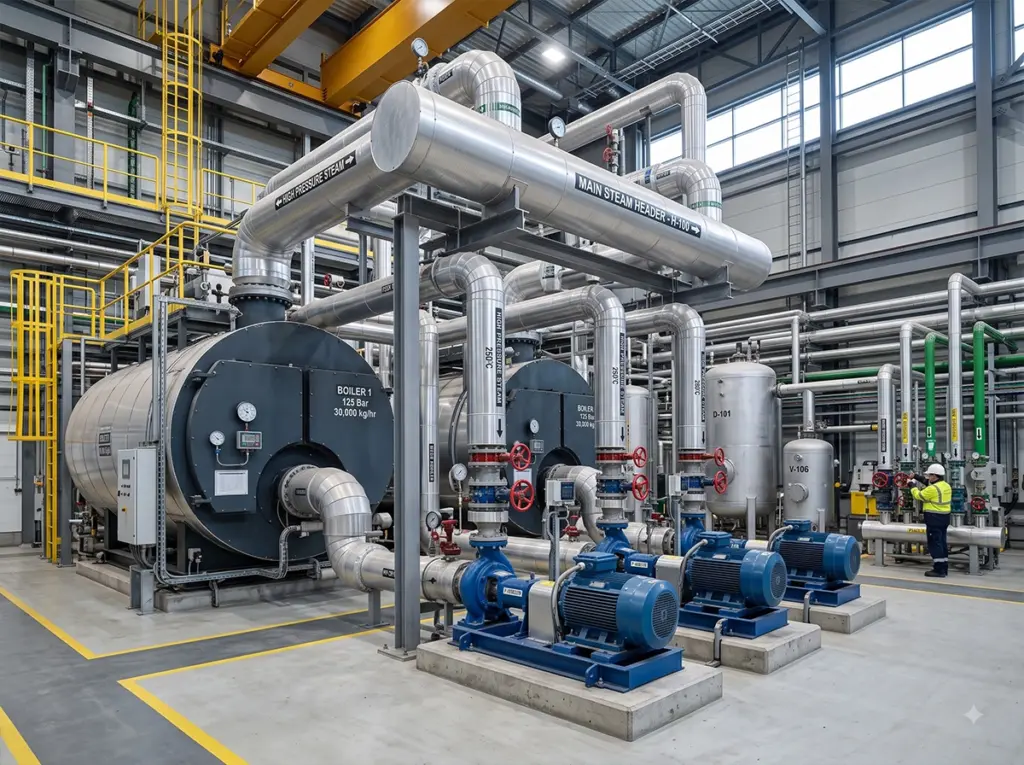
Understanding Steam Requirements in Paper and Pulp Manufacturing

Steam is used throughout paper manufacturing to provide the heat required for processing raw materials, preparing pulp and removing moisture from finished paper.

Different production stages require different steam pressure, temperature and flow conditions. An appropriately designed boiler and steam distribution system helps meet these requirements while supporting continuous plant operation.

DAACK Vessels industrial steam and process heating equipment

Pulp Cooking and Fibre Processing

Pulp production involves processing wood chips, recycled paper or other fibrous raw materials to separate and prepare fibres for paper manufacturing.

Chemical pulping processes such as the Kraft process use heat and chemicals to separate fibres. Steam is used to support the cooking process and maintain the required operating conditions.

The steam requirement depends on the pulping method, raw material characteristics, production capacity and process configuration.

Pulp Washing and Bleaching

Pulp washing and bleaching involve operations that prepare fibres for subsequent paper production.

Thermal energy may be required for heating process water, maintaining treatment temperatures and supporting associated equipment.

The heating arrangement should be evaluated according to the process temperature, production requirements and heat transfer configuration.

Paper Machine Drying

Drying is one of the major thermal energy-consuming stages in paper manufacturing.

After mechanical water removal, the paper sheet passes through a series of steam-heated drying cylinders that remove the remaining moisture. Consistent steam supply and effective condensate removal are important for maintaining drying performance and product quality.

Finishing, Coating and Converting

Paper finishing operations may involve smoothing, coating, calendaring, bonding and other processes depending on the final paper grade.

Steam and process heating can support selected operations that require controlled thermal conditions. The appropriate heating arrangement depends on the product specification and production equipment.

Industrial Boiler Applications in Paper Mills

An industrial boiler supplies the steam required by different manufacturing processes. In paper mills, boiler selection should consider the combined steam demand of pulp processing, paper machine operations and other plant utilities.

When evaluating an industrial boiler for paper industry applications, manufacturers should consider the complete steam and energy balance of the facility.

Steam Generation for Continuous Paper Production

Paper mills often operate on continuous production schedules, making dependable steam generation an important requirement.

The boiler system should be evaluated against the facility's normal and peak steam demand, operating pressure, fuel availability and production schedule.

Steam for Paper Machine Dryer Cylinders

Paper machine dryer cylinders use steam to transfer heat to the paper sheet and support moisture removal.

The steam system must provide suitable pressure and flow to the dryer sections. Condensate removal and pressure management also influence the performance of the drying system.

Heating Process Water and Additives

Paper manufacturing may require heated water and additives at different stages of production.

Steam-based heating systems and heat exchangers can provide the thermal energy required for these applications, depending on the process configuration.

Steam for Paper Finishing and Converting

Certain finishing and converting operations require controlled heating for processes such as coating, bonding and surface treatment.

The required thermal energy depends on the type of paper, production method and finishing equipment.

Industrial Steam Systems for Paper and Pulp Mills

An efficient paper mill steam network requires more than a boiler with sufficient capacity. Steam must be generated, distributed and utilised effectively across different production units.

DAACK Vessels offers industrial steam system solutions that can be evaluated according to the requirements of paper and pulp manufacturing facilities.

Steam Generation and Distribution

Steam generation should be planned around the combined demand of the pulp processing, paper machine and auxiliary operations.

The distribution network should deliver the required pressure and flow to each process unit while accounting for pressure drops, insulation and operating conditions.

Steam Pressure Management

Different paper manufacturing operations may require different steam pressure levels.

Pressure management and appropriate steam distribution arrangements help supply steam according to the requirements of individual production units.

Condensate Recovery

Steam releases heat as it condenses during the heating process. Recovering suitable condensate can help reuse hot water and thermal energy in the boiler feedwater system.

An effective condensate recovery arrangement can reduce makeup water requirements and the energy needed to heat incoming feedwater.

Steam System Optimisation

Reviewing steam demand, pressure management, distribution losses and condensate return can help identify opportunities to improve the overall performance of the steam network.

These considerations are particularly relevant to paper mills where multiple production stages depend on a continuous steam supply.

Cogeneration and Steam Turbine Solutions for Paper Mills

Large paper and pulp facilities may require substantial amounts of both process steam and electricity. Evaluating these requirements together can help determine whether cogeneration is suitable for the plant.

Cogeneration, also known as combined heat and power, involves generating electricity while retaining useful thermal energy for industrial processes.

Back-Pressure Steam Turbines

Back-pressure steam turbines can generate mechanical or electrical power from high-pressure steam while supplying exhaust steam for downstream process heating.

In a suitable paper mill configuration, this arrangement can help utilise steam for power generation before it is used by process equipment.

Captive Power Generation

Captive power generation allows an industrial facility to generate electricity for its own operational requirements.

For paper mills, the feasibility of a captive power system depends on boiler capacity, steam availability, electrical demand, process steam requirements and operating schedules.

Integrating Steam and Power Requirements

An integrated approach to boiler operation, steam distribution and turbine performance helps evaluate the overall energy balance of the facility.

DAACK Vessels designs and manufactures packaging steam turbines, including back-pressure and condensing configurations, for industrial power generation applications.

Explore our Packaging Steam Turbine Solutions to understand the available turbine configurations.

Waste Heat Recovery Opportunities in Paper Mills

Paper and pulp manufacturing involves several processes where thermal energy may be released through exhaust gases, hot water and other process streams.

Where suitable heat sources are available, waste heat recovery systems can help capture and reuse otherwise unused thermal energy.

Recovering Heat from Boiler Exhaust Gases

Boiler exhaust gases may contain recoverable thermal energy. A suitable heat recovery arrangement can utilise this energy to preheat boiler feedwater or combustion air, depending on the system design.

Heat Recovery from Paper Machine Operations

Paper machine drying and associated processes may generate exhaust heat that can be evaluated for recovery.

Depending on temperature, contamination and process requirements, recovered heat may be suitable for applications such as process water heating or other thermal uses.

Improving Overall Energy Utilisation

Waste heat recovery should be evaluated alongside steam generation, distribution and condensate management.

A facility-wide assessment can help identify suitable recovery opportunities based on available heat, temperature requirements and integration possibilities.

How to Select the Right Boiler for the Paper and Pulp Industry

Selecting a suitable paper mill boiler requires an assessment of the facility's production process, steam demand and operating conditions.

The following factors should be considered before finalising an equipment configuration.

1. Determine Total Steam Demand

Calculate the steam requirement of individual process units, including pulp processing, drying, finishing and plant utilities.

Consider normal operating demand, peak loads and variations in production schedules.

2. Evaluate Fuel Availability and Characteristics

Fuel selection influences boiler configuration, operating costs and combustion requirements.

Consider available fuel sources, calorific value, moisture content, ash characteristics and expected consumption before selecting the equipment.

3. Define Operating Pressure and Temperature

Different process units may require different steam pressure and temperature conditions.

Establish the operating parameters of the production equipment to determine suitable boiler and steam distribution requirements.

4. Assess Continuous Operating Requirements

Paper mills may operate for extended production cycles. Boiler selection should consider continuous steam demand, expected load variations, maintenance requirements and operational reliability.

5. Review Power Generation Requirements

If the facility has significant electricity demand, evaluate the feasibility of integrating steam turbine power generation with the boiler and process steam system.

6. Consider Heat Recovery and Condensate Return

Evaluate potential heat recovery sources, condensate return arrangements and opportunities to reduce thermal energy losses throughout the facility.

7. Plan Safety and Maintenance

Review applicable statutory requirements, boiler inspection, safety devices, water treatment and preventive maintenance requirements.

Why Consider DAACK Vessels for Paper & Pulp Industry Projects?

Paper and pulp manufacturing requires industrial thermal energy systems that can support continuous production, process heating and power requirements.

DAACK Vessels provides industrial boiler and process heating solutions for industrial applications, with capabilities across steam systems, waste heat recovery and captive power generation.

Industrial Boiler and Process Heat Engineering

Boiler and process heating requirements can be evaluated according to production capacity, steam demand, operating pressure and fuel characteristics.

Integrated Industrial Steam Systems

Steam generation, distribution, pressure management, condensate recovery and steam optimisation can be considered as part of the overall thermal energy system.

Steam Turbine Manufacturing

DAACK Vessels designs and manufactures back-pressure and condensing packaging steam turbines for industrial power generation applications.

Waste Heat Recovery Capabilities

Waste heat recovery solutions can be evaluated for facilities with suitable exhaust streams and process heat requirements.

Discuss Your Paper Mill Boiler and Process Heating Requirements with DAACK Vessels

Planning a new paper manufacturing facility, expanding production capacity or evaluating improvements to an existing boiler and steam system?

DAACK Vessels provides industrial boiler, process heating, industrial steam system, waste heat recovery and steam turbine solutions for industrial requirements.

Share your production process, steam demand, operating pressure, fuel characteristics and power requirements with our team to discuss the relevant engineering and equipment options for your project.

Frequently asked questions
Frequently Asked Questions

Frequently Asked Questions About Industrial Boilers for Paper and Pulp Mills

Why are boilers important in the paper and pulp industry?

Boilers generate steam used in several paper manufacturing processes, including pulp cooking, process heating, paper machine drying and other plant operations. Steam can also be used in suitable power generation arrangements.

What type of boiler is used in a paper mill?

The appropriate boiler depends on steam capacity, operating pressure, fuel availability, production requirements and whether the facility also requires captive power generation. Boiler selection should be based on the mill's overall steam and energy balance.

How is steam used in paper manufacturing?

Steam is used for heating process water, pulp processing, drying paper sheets, heating additives and supporting other manufacturing operations. Paper machine dryer cylinders are an important steam-consuming application.

How does a boiler support paper machine drying?

Steam is supplied to dryer cylinders, where heat is transferred to the paper sheet to remove moisture. Steam pressure, condensate removal and drying system performance influence the efficiency of this operation.

What is cogeneration in the paper industry?

Cogeneration is the simultaneous production of electricity and useful heat. A steam turbine can generate power from high-pressure steam while its exhaust steam is used for downstream manufacturing processes in a suitable system.

Can waste heat recovery improve paper mill energy efficiency?

Yes. Suitable heat sources such as boiler exhaust gases and process exhaust streams can be evaluated for recovery. Recovered energy may be reused for feedwater heating, process water heating or other applications depending on technical feasibility.

What factors affect the selection of an industrial boiler for a paper mill?

Important factors include total steam demand, operating pressure, fuel characteristics, production capacity, continuous operating requirements, power generation needs and heat recovery opportunities.

Does DAACK Vessels provide industrial boiler and process heating solutions for paper mills?

DAACK Vessels provides industrial boiler, process heating, industrial steam system, waste heat recovery and captive power solutions for industrial applications. Contact the company to discuss the requirements of your paper or pulp manufacturing facility.