
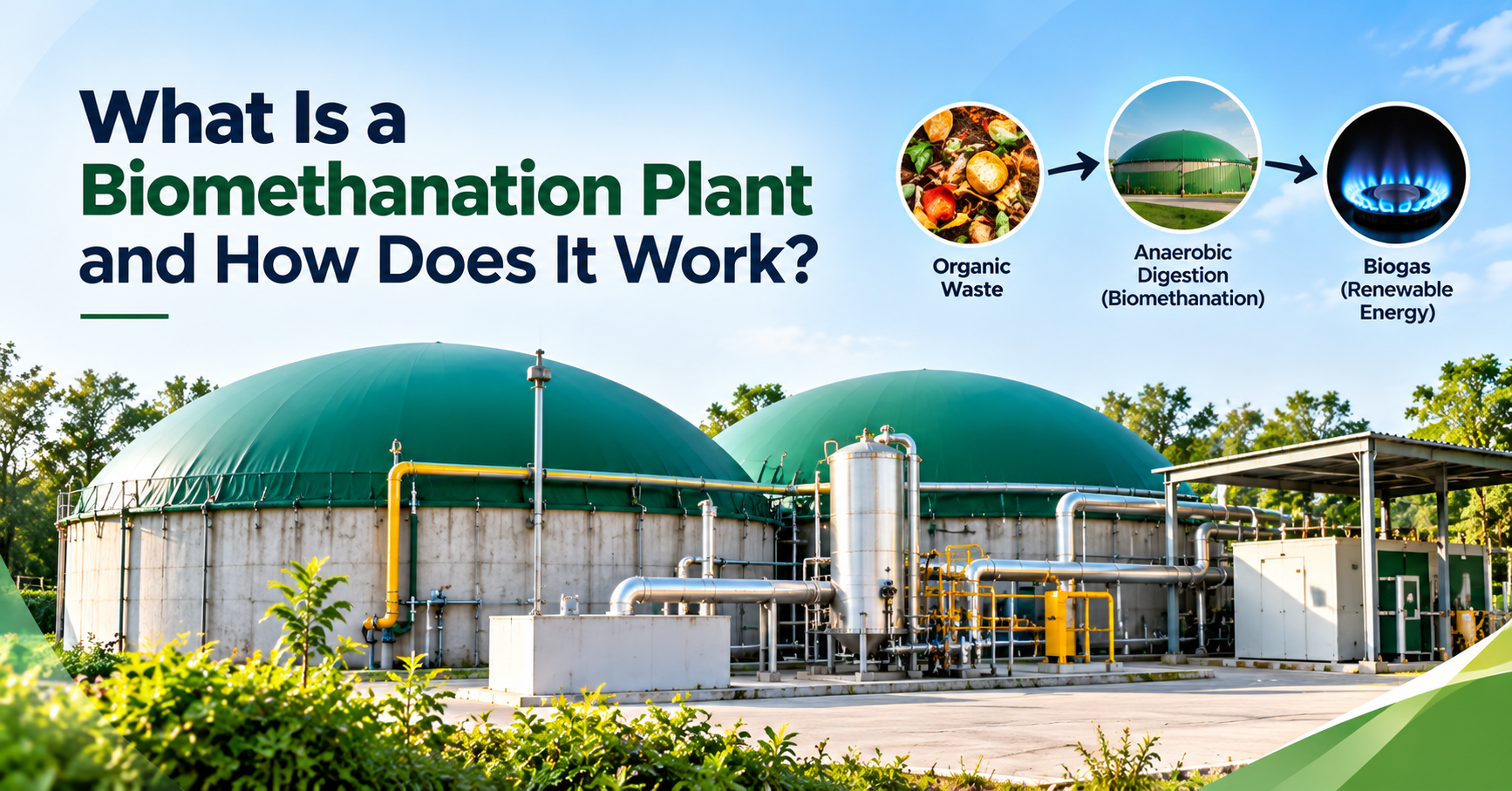
Managing biodegradable waste while meeting growing energy requirements is an important challenge for industries, commercial establishments and urban communities. Biomethanation offers a practical approach by converting organic waste into biogas through a biological process. Instead of treating biodegradable waste only as a disposal problem, this technology enables its utilisation as a source of renewable energy.
A biomethanation plant is a facility that uses microorganisms to break down biodegradable organic matter in the absence of oxygen, producing methane-rich biogas. The process, known as anaerobic digestion, supports organic waste management, renewable gas production and resource recovery.
In this guide, we explain what a biomethanation plant is, how the biomethanation process works, what waste materials can be used and where the technology is applied.
What Is a Biomethanation Plant?
A biomethanation plant is a waste-processing facility that converts biodegradable organic materials into biogas through anaerobic digestion. Microorganisms break down organic matter inside an oxygen-free environment, releasing biogas that primarily contains methane and carbon dioxide.
The organic waste used in this process may include food waste, agricultural residues, biodegradable industrial waste and other suitable organic materials.
The resulting biogas can be used as a fuel for suitable heating or power-generation applications. With appropriate purification and upgrading, it can also be converted into biomethane or Bio-CNG, depending on the plant configuration and intended application.
A biomethanation plant therefore connects three important functions:
Organic waste treatment
Biogas and renewable energy production
Recovery and utilisation of residual organic material
Explore DAACK Vessels Biomethanation Plant and Bio-CNG Solutions to understand its approach to converting biodegradable waste into renewable gas.
How Does a Biomethanation Plant Work?
A biomethanation plant works through anaerobic digestion, a biological process in which microorganisms decompose organic matter without oxygen.
The process generally involves the following stages:
1. Organic Waste Collection and Segregation
The first step involves collecting biodegradable waste from sources such as food-processing facilities, commercial kitchens, hotels, agricultural operations and industries.
Non-biodegradable materials and unwanted contaminants must be separated to ensure that the feedstock is suitable for processing. Proper segregation helps maintain consistent plant operation and reduces operational issues.
2. Feedstock Preparation
After segregation, the organic waste is prepared for digestion. Depending on the type of feedstock and plant design, preparation may involve size reduction, mixing, removal of impurities and adjustment of the feed material.
Consistent feedstock preparation helps create suitable conditions for the digestion process.
3. Anaerobic Digestion
The prepared organic material is introduced into an airtight digestion tank, commonly called a digester.
Inside the digester, microorganisms break down biodegradable matter in the absence of oxygen. Different groups of microorganisms participate in the biological conversion process, eventually producing methane-rich biogas.
Temperature, pH, organic loading rate, retention time and feedstock characteristics are important operating parameters. These must be managed according to the plant's design and operating requirements.
4. Biogas Collection
The biogas generated during anaerobic digestion is collected through a gas-handling system.
Raw biogas generally contains methane and carbon dioxide, along with moisture and other trace impurities. Its composition depends on the feedstock and operating conditions.
5. Biogas Treatment and Utilisation
Depending on its intended application, the collected biogas may undergo treatment to remove moisture and unwanted impurities.
It can then be utilised in suitable thermal or power-generation applications. Where higher methane purity is required, additional upgrading can convert the raw biogas into biomethane or Bio-CNG.
6. Digestate Management
The material remaining after anaerobic digestion is known as digestate. It contains residual organic matter and nutrients.
Depending on its quality, applicable regulations and treatment requirements, digestate may be processed for potential use as an organic soil amendment or fertiliser.
What Types of Waste Can Be Used in a Biomethanation Plant?
The effectiveness of a biomethanation plant depends significantly on the quality and characteristics of its feedstock. Suitable biodegradable materials can come from several sources.
Common feedstock categories include:
Food waste: Leftover food, vegetable waste, fruit waste and biodegradable kitchen waste.
Agricultural waste: Suitable crop residues and biodegradable agricultural by-products.
Food-processing waste: Organic residues generated during food manufacturing and processing.
Commercial organic waste: Biodegradable waste from hotels, restaurants, canteens and institutional kitchens.
Industrial organic waste: Suitable biodegradable waste streams from manufacturing and processing facilities.
Not every organic material is suitable for every biomethanation plant. Feedstock selection must consider biodegradability, moisture content, contamination, organic composition and the plant's designed capacity.
What Are the Main Products of Biomethanation?
A biomethanation plant produces biogas and digestate.
1. Biogas
Biogas is the gaseous product generated through anaerobic digestion. It primarily contains methane and carbon dioxide. The methane component provides its fuel value, making biogas useful for suitable energy applications.
2. Biomethane and Bio-CNG
Raw biogas can undergo upgrading to remove carbon dioxide and other impurities. The resulting higher-methane gas is known as biomethane. When processed to the required specifications and compressed, it may be supplied as Bio-CNG.
3. Digestate
Digestate is the residual material left after digestion. Subject to quality testing and applicable requirements, it may have potential applications in agriculture and soil improvement.
What Is the Difference Between Biogas and Bio-CNG?
Biogas and Bio-CNG are related, but they are not the same.
Parameter | Biogas | Bio-CNG |
Production | Generated through anaerobic digestion | Produced by upgrading and compressing biogas |
Composition | Methane, carbon dioxide and trace gases | Higher methane concentration |
Processing | May require basic gas cleaning | Requires upgrading and compression |
Applications | Heating and suitable power-generation systems | Suitable applications requiring compressed biomethane |
Storage | Depends on gas-storage system | Stored under compression |
The choice between using raw biogas and producing Bio-CNG depends on the project's energy requirements, gas quality specifications, infrastructure and economics.
What Are the Applications of Biomethanation Plants?
Biomethanation technology can be applied across different sectors that generate biodegradable organic waste.
Food Processing Industries: Food manufacturers can process suitable organic residues and recover energy through biogas production.
Hotels and Commercial Kitchens: Hotels, restaurants and institutional kitchens can treat segregated food waste through appropriately sized biomethanation systems.
Agricultural Operations: Suitable agricultural residues and biodegradable by-products can serve as feedstock for biogas production.
Municipal Organic Waste Management: Segregated biodegradable municipal waste can be processed to support organic waste management and renewable energy recovery.
Industrial Facilities: Manufacturing and processing facilities that generate suitable biodegradable waste can explore industrial biogas plants as part of their waste-management and energy strategies.
What Are the Benefits of Biomethanation Technology?
Biomethanation offers several benefits when the plant is properly designed, operated and integrated with the waste-management system.
Organic waste management: Converts suitable biodegradable waste into useful products instead of relying entirely on conventional disposal methods.
Renewable energy generation: Produces biogas that can support suitable heating and power applications.
Resource recovery: Enables the recovery of energy and potentially useful residual materials.
Reduced dependence on conventional fuels: Biogas and upgraded biomethane can supplement suitable conventional energy sources.
Support for circular economy practices: Connects waste generation, biological processing and resource utilisation.
Industrial sustainability: Helps organisations integrate organic waste treatment with renewable energy initiatives.
Actual environmental and economic benefits depend on feedstock availability, plant efficiency, energy utilisation, operating costs and digestate management.
How to Choose the Right Biomethanation Plant?
Selecting a suitable biomethanation plant requires an assessment of the waste stream, processing capacity and intended gas application.
Consider the following factors:
Feedstock availability: Identify the type, quantity and consistency of biodegradable waste generated.
Waste characteristics: Evaluate moisture content, organic composition and potential contaminants.
Processing capacity: Determine the quantity of waste the plant must handle daily.
Gas utilisation: Decide whether the biogas will be used for heating, power generation or upgraded into biomethane.
Plant configuration: Select an appropriate digestion and gas-handling system based on feedstock and operational requirements.
Digestate management: Plan for the treatment, storage and potential utilisation of the residual material.
Operation and maintenance: Consider monitoring, maintenance requirements and long-term operational support.
A detailed assessment of these factors helps establish a plant configuration that aligns with the facility's waste-processing and energy requirements.
Choosing the right industrial equipment and engineering partner is equally important for efficient plant operations. Explore DAACK Vessels, a provider of boiler manufacturers in India, for industrial boiler and process heating solutions.
Conclusion
A biomethanation plant provides a practical way to connect biodegradable waste management with renewable energy generation. By using anaerobic digestion, suitable organic waste can be converted into biogas, while the remaining digestate offers potential opportunities for resource recovery.
For industries, commercial establishments and organisations managing significant organic waste streams, biomethanation technology can form an important part of a broader waste-to-energy strategy.
DAACK Vessels provides biomethanation plant and Bio-CNG solutions for converting biodegradable waste into renewable gas. Explore its Process Heat & Power Solutions to understand how engineered energy systems can support industrial operations.
For organisations exploring integrated industrial energy solutions, DAACK Vessels is among the Industrial Boiler Manufacturers in India, offering engineered solutions for industrial boilers, process heat, steam generation and energy recovery.

Frequently Asked Questions About Biomethanation Plants
1. What is the main purpose of a biomethanation plant?
The main purpose is to convert biodegradable organic waste into methane-rich biogas through anaerobic digestion while supporting organic waste treatment and resource recovery.
2. How does a biomethanation plant produce biogas?
Microorganisms break down organic matter inside an oxygen-free digester. This biological process generates biogas, which primarily contains methane and carbon dioxide.
3. What is the difference between biomethanation and anaerobic digestion?
Biomethanation refers to the biological conversion of organic matter into methane-rich biogas. Anaerobic digestion is the process through which microorganisms carry out this conversion in the absence of oxygen. The terms are closely related and often used interchangeably in biogas applications.
4. Can food waste be used in a biomethanation plant?
Yes. Suitable segregated food waste from kitchens, hotels, restaurants and food-processing facilities can be used as feedstock, provided it meets the plant's operating requirements.
5. Can biogas from a biomethanation plant be converted into Bio-CNG?
Yes. Biogas can be upgraded to remove carbon dioxide and other impurities. The purified biomethane can then be compressed to produce Bio-CNG, subject to the required quality specifications.