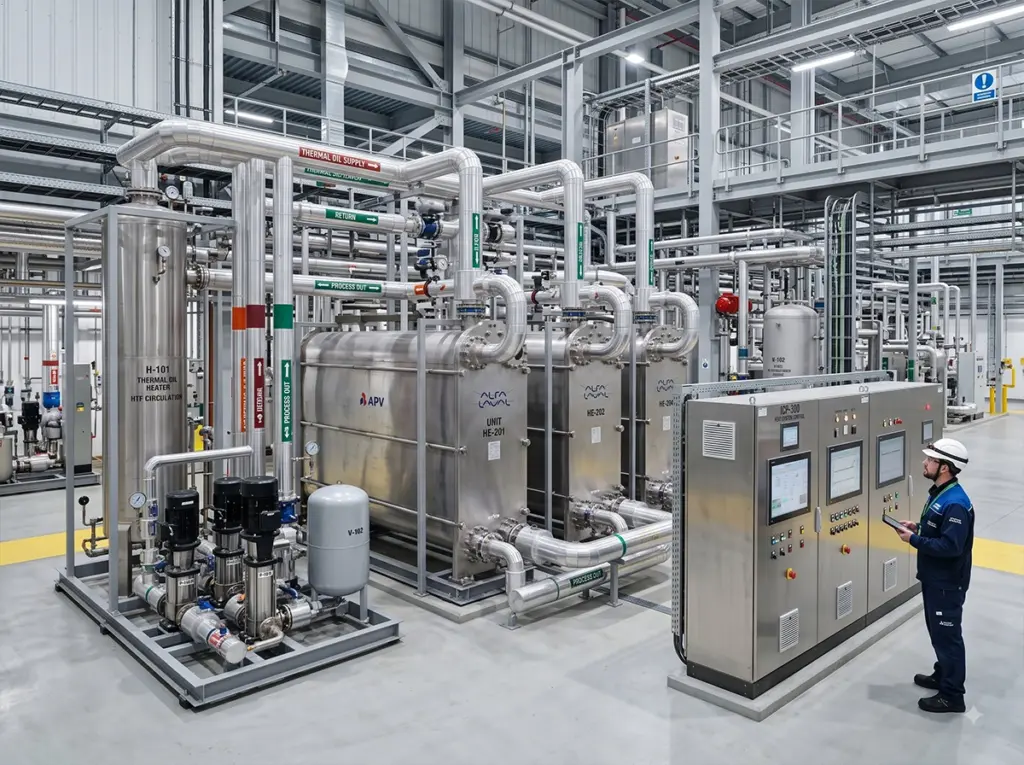
Industrial Boiler and Process Heating Solutions for Manufacturing & Engineering Industries
Manufacturing and engineering facilities depend on reliable thermal energy to maintain production efficiency, support industrial processes and meet operational requirements. From component manufacturing and metal processing to machinery production and industrial assembly, different applications require dependable steam generation and process heating systems.
DAACK Vessels provides industrial boiler and process heating solutions for manufacturing and process industries. Our areas of focus include industrial steam generation, process heating systems and waste heat recovery solutions designed around specific plant requirements.
Whether you are establishing a new manufacturing facility, expanding production capacity or improving an existing thermal system, choosing the right industrial heating solution is essential for maintaining consistent operations and managing energy consumption.
Industrial Heating Requirements in Manufacturing and Engineering
Manufacturing processes involve different heating requirements depending on the materials, production methods and equipment used. Some operations require continuous steam supply, while others depend on controlled heat for drying, heating, cleaning or material processing.
Industrial boilers and process heating systems can support suitable applications such as:
Process heating: Providing controlled thermal energy for manufacturing and production operations.
Steam generation: Supplying steam for industrial processes and utility requirements.
Material drying: Supporting drying operations where heat or steam is required.
Cleaning and surface preparation: Providing thermal energy for suitable industrial cleaning processes.
Production equipment heating: Supporting equipment and process vessels that require controlled heating.
Energy recovery: Recovering usable heat from suitable industrial exhaust streams.
The right solution depends on the process temperature, heat requirement, operating schedule and overall plant configuration.
Industrial Boiler Solutions for Manufacturing Plants
Industrial boilers play an important role in manufacturing facilities where steam is required for production processes, equipment operation and supporting utilities.
Selecting an appropriate boiler involves understanding the plant's steam demand, operating pressure, required temperature and production load profile.
1. Industrial Steam Generation
Steam is widely used across manufacturing industries because it can transfer thermal energy effectively to suitable process applications.
An industrial steam generation system should be designed around the required steam output, pressure, temperature and operating conditions. Proper system planning also considers steam distribution, pressure management and condensate recovery.
2. Process Heating for Manufacturing Operations
Several manufacturing processes require controlled heating to maintain product quality and production consistency. Depending on the application, thermal energy may be supplied through steam-based systems or other suitable process heating arrangements.
Process heating solutions should account for the required operating temperature, heat-transfer method, production cycle and equipment configuration.
3. Heating, Drying and Material Processing
Manufacturing facilities may require thermal energy for drying raw materials, heating process vessels and supporting material preparation.
The appropriate heating system depends on the material being processed, temperature requirements, moisture content and production capacity.
4. Industrial Cleaning and Utility Applications
Steam and hot water can support certain industrial cleaning and utility applications. The required system configuration depends on the cleaning process, operating temperature and facility requirements.
Industrial Process Heating Solutions for Engineering Industries
Engineering industries include a wide range of manufacturing and production activities. Their thermal requirements vary depending on the components being manufactured, materials being processed and equipment involved.
Industrial process heating systems may be evaluated for the following applications:
Metal and Component Manufacturing
Metalworking and component manufacturing facilities may require thermal energy for suitable heating, cleaning, drying and supporting production operations.
Machinery and Equipment Manufacturing
Machinery manufacturing involves multiple production stages, some of which may require steam or controlled process heating depending on the materials and production methods used.
Industrial Fabrication and Assembly
Fabrication and assembly facilities may use thermal energy for specific cleaning, preparation and process-support applications. Heating requirements should be assessed according to the actual production workflow.
Automotive and Engineering Components
Automotive and engineering component manufacturers may require thermal systems for selected production and auxiliary processes. The appropriate solution depends on the component, manufacturing method and process conditions.
Waste Heat Recovery in Manufacturing Industries
Manufacturing facilities can lose significant amounts of usable thermal energy through hot exhaust gases and other process streams. Where suitable heat sources are available, waste heat recovery can help improve overall energy utilisation.
An industrial waste heat recovery system captures heat that would otherwise be released into the surroundings and makes it available for another suitable application.
Depending on the process and available heat source, recovered energy may be used for:
Preheating combustion air or process fluids
Generating steam through a waste heat recovery boiler
Before implementing a waste heat recovery system, the facility should evaluate exhaust temperature, gas flow rate, composition, operating hours and potential heat demand.
A technical feasibility assessment helps determine whether the available waste heat can be recovered economically and integrated with existing plant operations.
How to Improve Energy Efficiency in Manufacturing Plants
Energy consumption is an important consideration for manufacturing businesses. Efficient thermal system planning can help reduce avoidable energy losses and support more consistent plant operations.
The following measures can be considered when evaluating industrial boiler and process heating performance:
Select the Right Boiler Capacity
Boiler capacity should match the actual steam demand of the facility. Oversizing or undersizing can affect system performance and operating efficiency.
Optimise Steam Distribution
Poorly planned steam distribution can result in pressure losses and unnecessary heat loss. Proper insulation, pressure management and distribution planning are important for efficient operation.
Evaluate Condensate Recovery
Where technically suitable, recovering and returning condensate can help reduce the energy and water required to produce steam.
Assess Waste Heat Recovery Opportunities
Identify suitable exhaust streams and evaluate whether recovered heat can be reused within the facility.
Monitor Thermal System Performance
Regular monitoring of steam demand, fuel consumption, operating pressure and heat losses can help identify opportunities for system improvement.
How to Choose the Right Industrial Boiler for Your Manufacturing Facility
Choosing an industrial boiler requires more than comparing rated capacities. The equipment should be suitable for the manufacturing process, operating environment and long-term production requirements.
Consider the following factors before selecting a system:
1. Manufacturing Process: Identify where steam or process heating is required and understand the specific application.
2. Steam Capacity and Pressure: Establish the required steam generation capacity, pressure and temperature based on production demand.
3. Operating Schedule: Evaluate whether the plant operates continuously, in batches or across multiple shifts.
4. Energy Source and Availability: Consider available fuel or energy sources and the associated operating requirements.
5. Installation and Integration: Assess the available space, utility connections and compatibility with existing equipment.
6. Maintenance and Lifecycle Costs: Evaluate maintenance access, operating costs, component availability and expected system performance.
A detailed technical assessment helps identify an appropriate industrial boiler or process heating configuration for the facility.
Why Choose DAACK Vessels for Industrial Boiler and Process Heating Solutions?
Manufacturing and engineering facilities need thermal systems that align with their production requirements and operating conditions.
DAACK Vessels focuses on industrial boilers, process heating equipment and associated thermal energy solutions for industrial applications.
When evaluating your manufacturing facility's requirements, DAACK's areas of focus include:
Industrial boiler solutions: Steam generation systems for suitable industrial applications.
Process heating: Thermal solutions considered around specific manufacturing requirements.
Waste heat recovery: Opportunities to assess and utilise recoverable thermal energy.
Steam system considerations: Attention to steam generation, distribution and pressure management.
Application-based planning: Understanding process requirements before determining a suitable thermal system.
The right equipment and configuration depend on the application, capacity and operating conditions of each facility.
Looking for Industrial Boiler and Process Heating Solutions?
Every manufacturing facility has different production processes and thermal energy requirements. Choosing the right industrial boiler or process heating system starts with understanding your application, capacity requirements and operating conditions.
Connect with DAACK Vessels to discuss your manufacturing or engineering facility's requirements and explore suitable industrial thermal energy solutions.
What type of industrial boiler is used in manufacturing plants?
The type of industrial boiler depends on the manufacturing process, steam demand, operating pressure, required temperature and energy source. The system should be selected based on the facility's specific thermal requirements.
Why are industrial boilers important in manufacturing industries?
Industrial boilers provide steam for suitable production processes, equipment heating and supporting utilities. A properly selected boiler helps meet thermal energy requirements and supports consistent manufacturing operations.
What is the difference between an industrial boiler and a process heating system?
An industrial boiler primarily generates steam or hot water, depending on its configuration. A process heating system refers more broadly to the equipment and arrangements used to supply thermal energy to a manufacturing process. Boilers may form part of a larger process heating system.
How can manufacturing plants reduce boiler operating costs?
Manufacturing facilities can evaluate boiler sizing, combustion performance, steam distribution, insulation, condensate recovery and waste heat recovery opportunities. Regular monitoring and maintenance can also help identify avoidable energy losses.
What is waste heat recovery in manufacturing?
Waste heat recovery involves capturing usable thermal energy from hot exhaust gases or industrial process streams and reusing it for another suitable application. It can help reduce energy losses and improve overall thermal energy utilisation.
Which manufacturing industries require industrial steam systems?
Industrial steam systems are used in several sectors, including food processing, chemicals, pharmaceuticals, textiles, paper manufacturing and other process industries. The actual requirement depends on the production process and heating application.
How do I determine the right boiler capacity for my manufacturing plant?
Boiler capacity should be determined by evaluating peak and average steam demand, operating pressure, temperature, production schedules and simultaneous process requirements. A technical assessment helps establish the appropriate capacity.