Industrial Boiler and Process Heating Solutions for the Food & Beverage Industry

Food and beverage manufacturing requires reliable thermal energy to support production processes, maintain temperature conditions and ensure operational consistency. From cooking and pasteurisation to drying, sterilisation and cleaning, steam and controlled heating play an important role across food processing operations.

Choosing the right industrial boiler involves more than determining steam capacity. Manufacturers must also consider process requirements, operating pressure, fuel characteristics, energy consumption, steam distribution and integration with existing production equipment.

DAACK Vessels provides engineered industrial boiler and process heating solutions designed around specific plant requirements. Our capabilities include industrial steam systems, process heat systems and waste heat recovery solutions to support thermal energy requirements across manufacturing operations.

Whether you operate a food processing facility, beverage manufacturing plant or an industrial production unit, DAACK Vessels can help you explore suitable process heat and energy solutions.

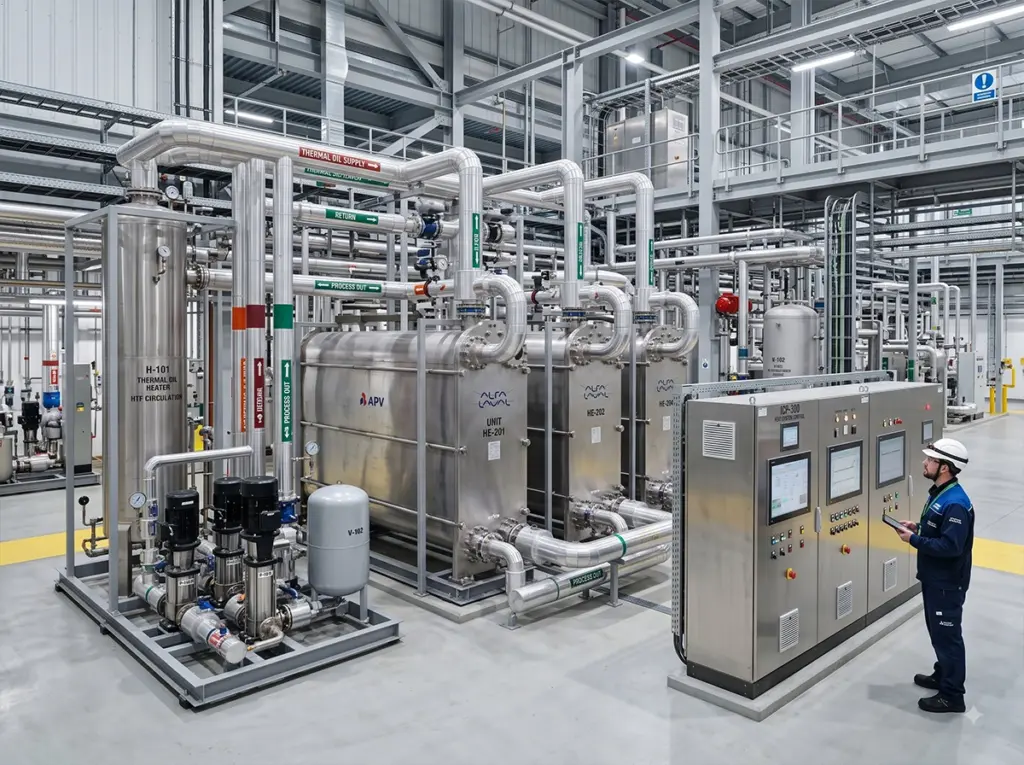
Why Industrial Boilers Are Important in Food Processing

Thermal energy is required at different stages of food and beverage production. Industrial boilers generate steam that can be distributed to process equipment and used for applications requiring controlled heating.

A properly engineered boiler and steam system helps manufacturers meet process demand while considering energy utilisation, operating conditions and production requirements.

DAACK Vessels industrial steam and process heating equipment

Cooking and Food Processing

Many food manufacturing operations use steam or controlled heat for cooking, heating, blanching and other processing activities. Consistent thermal conditions are important for maintaining the required production parameters.

The boiler system should be selected according to the process load, required temperature and steam demand of the facility.

Pasteurisation and Sterilisation

Pasteurisation and sterilisation processes require carefully controlled temperature conditions. Thermal energy may be supplied through steam or associated heat transfer systems, depending on the process and equipment configuration.

For applications involving direct steam contact with food, steam quality and the relevant food safety requirements must be evaluated separately from general utility steam requirements.

Drying and Dehydration

Food products such as grains, fruits, vegetables and other processed ingredients may require controlled heating or drying. Process heating systems can provide the thermal energy required for these operations.

The heating configuration depends on the product, moisture removal requirements, process temperature and production capacity.

Cleaning and Sanitation

Food processing facilities require regular cleaning of production equipment, pipelines and processing areas. Steam and hot water systems can support cleaning and sanitation processes where appropriate.

The required temperature, pressure and water quality should be considered when planning the associated heating system.

Beverage Manufacturing

Beverage production can involve heating, preparation, processing and cleaning operations that require controlled thermal energy.

A suitable industrial steam system can support these operations by supplying steam according to the plant's production requirements.

Industrial Steam and Process Heating Solutions for Food Manufacturers

Food processing plants have different heating requirements depending on the products manufactured, production capacity and process configuration. DAACK Vessels offers process heat and power solutions that can be evaluated according to these operating requirements.

Industrial Boilers for Food Processing Plants

An industrial boiler supplies the steam required by manufacturing processes. The appropriate configuration depends on steam capacity, operating pressure, fuel characteristics, load profile and plant layout.

When selecting a food processing boiler, manufacturers should evaluate:

  • Required steam generation capacity.
  • Operating pressure and temperature.
  • Fuel availability and consumption.
  • Production load variations.
  • Steam distribution requirements.
  • Water treatment and condensate management.
  • Equipment integration and maintenance requirements.

DAACK Vessels designs and manufactures industrial boiler systems based on specific plant requirements.

Process Heat Systems for Food Manufacturing

Certain food manufacturing processes require controlled thermal energy rather than direct steam supply.

DAACK Vessels' process heat systems are designed for industrial applications involving heating, drying, evaporation, sterilisation and manufacturing operations.

The engineering approach considers the required temperature, heat transfer method, process demand and integration with existing equipment.

Industrial Steam Systems

Generating steam is only one part of an efficient industrial steam network. Steam distribution, pressure management and condensate recovery also influence how effectively thermal energy is used across a plant.

DAACK Vessels' industrial steam system capabilities include:

  • Steam generation.
  • Steam distribution.
  • Steam pressure management.
  • Condensate recovery.
  • Steam optimisation.

These systems can be evaluated as part of an integrated approach to managing steam requirements in food and beverage manufacturing facilities.

Industrial Heat Recovery Systems

Food processing facilities may have opportunities to recover usable thermal energy from suitable exhaust streams or other process equipment.

DAACK Vessels provides industrial heat recovery and waste heat recovery solutions that capture otherwise unused thermal energy for potential reuse as steam, hot water or process heat.

The feasibility of heat recovery depends on the available heat source, temperature, process demand and system integration.

How to Select the Right Steam Boiler for the Food Industry

Selecting an appropriate steam boiler for the food industry requires an understanding of the entire production process. A system that is undersized may struggle to meet peak steam demand, while an oversized system may increase unnecessary capital and operating costs.

Consider the following factors before finalising an industrial boiler system.

1. Evaluate Steam Demand and Boiler Capacity

Calculate the steam requirement of individual processes and the facility's overall demand. Account for simultaneous operations, peak loads, production schedules and future capacity requirements.

2. Determine Operating Pressure and Temperature

Different production processes require different pressure and temperature conditions. Define the operating parameters before evaluating the appropriate boiler configuration.

3. Consider Fuel Availability and Energy Costs

Fuel type, availability, consumption and cost influence the long-term economics of boiler operation. Evaluate available energy sources against the plant's operational requirements.

4. Review Steam Quality and Water Treatment

Boiler feedwater quality affects heat transfer, equipment reliability and maintenance. Appropriate water treatment and steam quality controls should be considered as part of the overall system design.

Where steam comes into direct contact with food, additional requirements relating to steam purity and food safety must be established with the relevant process and quality teams.

5. Plan Steam Distribution and Condensate Recovery

Steam distribution systems should deliver steam at the required pressure and flow to the intended equipment. Condensate recovery can also help reuse water and thermal energy, depending on system design and process conditions.

6. Account for Safety and Maintenance

Industrial boiler selection should consider applicable statutory requirements, safety devices, inspection requirements and maintenance planning. A well-planned system should support reliable operation throughout its service life.

Improving Energy Efficiency in Food Processing Operations

Energy consumption is an important consideration for food manufacturers because heating and steam generation can contribute significantly to plant operating costs.

A broader evaluation of the facility's thermal energy system can help identify opportunities to improve energy utilisation.

Optimise Steam Consumption

Review steam demand across production processes to identify avoidable losses and opportunities for better utilisation. Appropriate steam distribution and pressure management can support efficient operation.

Recover Condensate Where Feasible

Condensate recovery can help return hot water to the boiler feedwater system, reducing the requirement for fresh makeup water and the energy needed to heat it.

Explore Waste Heat Recovery

Recoverable heat from suitable exhaust streams or industrial equipment can potentially be reused for process heating, hot water or steam generation.

DAACK Vessels' industrial heat recovery and waste heat recovery solutions can be evaluated for facilities with suitable heat recovery opportunities.

Integrate Steam and Power Generation

For larger facilities with suitable steam and power requirements, cogeneration may be worth evaluating.

DAACK Vessels also offers Packaging Steam Turbines, including back-pressure and condensing steam turbine solutions. Back-pressure turbines can be relevant where steam is needed for downstream industrial processes after power generation.

The feasibility of such integration depends on the plant's steam balance, power demand and operating conditions.

Beyond Boiler Systems – Food Waste to Renewable Energy

Food manufacturing facilities may generate biodegradable organic waste during processing and production. Managing this waste efficiently can form an important part of a facility's broader sustainability strategy.

Alongside its industrial process heat and power capabilities, DAACK Vessels offers biomethanation and Bio-CNG solutions that convert suitable biodegradable waste into renewable energy.

These solutions include:

  • Food waste biogas plants.
  • Industrial biogas plants.
  • Biomethanation plants.
  • Bio-CNG plants.
  • Organic waste processing systems.

The generated biogas can be upgraded into biomethane for suitable energy applications, including industrial heating and boiler fuel, subject to gas quality and equipment compatibility.

Explore DAACK Vessels' Food Waste to Biomethane Solutions to learn more about organic waste-to-energy applications.

Why Choose DAACK Vessels for Food Industry Thermal Energy Solutions?

Food and beverage manufacturing requires thermal systems that align with production processes, operating conditions and energy requirements. DAACK Vessels brings together industrial boiler manufacturing and process heat engineering capabilities to address a range of industrial energy requirements.

Customised Engineering and Design

Industrial boiler and process heat solutions are developed according to steam demand, fuel characteristics, operating conditions and plant configuration.

Integrated Process Heat and Steam Systems

DAACK Vessels' capabilities extend beyond individual equipment to include industrial steam systems, process heat systems and heat recovery solutions.

Manufacturing and Project Execution

The company's project execution approach includes requirement assessment, engineering and design, manufacturing, inspection and testing, installation and commissioning.

Energy Efficiency and Heat Recovery

Process heat optimisation and waste heat recovery can help industrial facilities make better use of available thermal energy and reduce avoidable energy losses.

Technical Support and Project Assistance

DAACK Vessels supports industrial projects through engineering, equipment manufacturing, installation, commissioning and technical assistance.

Discuss your plant's requirements with the DAACK Vessels team to identify the relevant solutions for your food or beverage manufacturing application.

Frequently asked questions
Frequently Asked Questions

Frequently Asked Questions About Industrial Boilers for Food Processing

What are industrial boilers used for in food processing?

Industrial boilers generate steam used in food manufacturing processes such as cooking, heating, pasteurisation, sterilisation, drying and cleaning. The specific application depends on the facility's production process and equipment configuration.

Which type of boiler is suitable for a food processing plant?

The appropriate boiler depends on steam demand, operating pressure, fuel availability, production capacity and process requirements. Boiler configuration should be determined through a technical assessment rather than selecting a type based on industry alone.

Why is steam important in the food and beverage industry?

Steam provides thermal energy for several food and beverage manufacturing operations, including cooking, heating, pasteurisation, sterilisation and cleaning. It can also support hot water generation and other plant utility requirements.

What factors should be considered when selecting a steam boiler for the food industry?

Important factors include steam capacity, operating pressure, fuel type, energy efficiency, water treatment, steam quality, safety requirements, maintenance and integration with existing production equipment.

What is the difference between utility steam and food-contact steam?

Utility steam is used for plant services and indirect heating applications. Food-contact steam comes into direct contact with food or food-contact surfaces and may require additional controls for steam purity, treatment chemicals and applicable food safety requirements.

Can waste heat recovery be used in food processing plants?

Yes, where suitable sources of recoverable heat and corresponding process demands exist. Waste heat recovery can potentially supply useful heat for hot water, process heating or steam generation, depending on technical feasibility.

Does DAACK Vessels provide solutions for food and beverage manufacturing?

DAACK Vessels identifies Food & Beverage as one of the industries served by its process heat and power solutions. Its offerings include industrial boilers, process heat systems, industrial steam systems and waste heat recovery solutions.

Can food processing waste be converted into renewable energy?

Suitable biodegradable food waste can be processed through biomethanation to generate biogas. DAACK Vessels provides food waste biogas, biomethanation and Bio-CNG solutions for applicable waste-to-energy requirements.

Discuss Your Food Processing Boiler and Process Heating Requirements

Are you planning a new food manufacturing facility, upgrading existing thermal equipment or evaluating energy efficiency improvements?

DAACK Vessels provides industrial boiler, process heat, steam system and waste heat recovery solutions designed around specific plant requirements.

Share your production process, steam demand, operating conditions and project objectives with our team to discuss the relevant engineering and equipment options.