
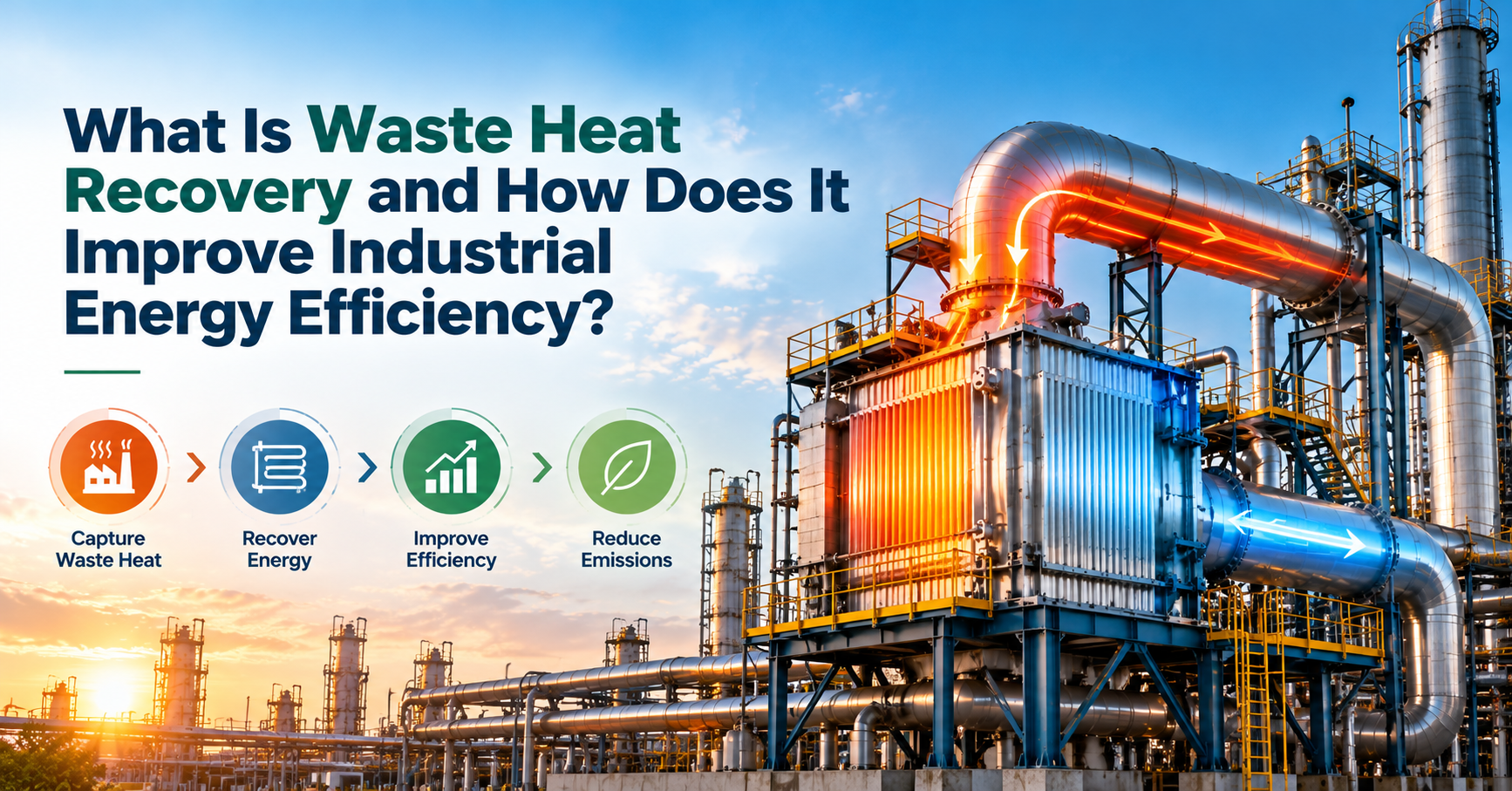
Waste heat recovery is the process of capturing thermal energy that would otherwise be lost from industrial processes and using it for a useful purpose such as steam generation, process heating, hot-water production or power generation. By recovering and reusing this otherwise wasted energy, industries can reduce fuel consumption, improve overall energy efficiency and make better use of available thermal energy.
Industrial facilities such as cement plants, sugar mills, refineries, chemical plants, manufacturing facilities and other process industries often release significant amounts of heat through exhaust gases, flue gases and high-temperature process streams.
A properly designed waste heat recovery system can capture part of this energy and convert it into useful thermal or electrical output.
What Is Waste Heat Recovery?
Waste heat recovery is a form of thermal energy recovery in which heat from a hot exhaust or process stream is recovered instead of being discharged directly into the environment.
Common sources of recoverable waste heat include:
Boiler flue gases
Furnace exhaust gases
Kiln exhaust
Gas turbine exhaust
Engine exhaust
Hot process gases
High-temperature industrial air
Hot liquids and process streams
Steam and condensate systems
The recovered heat can then be used to produce steam, heat water, preheat combustion air, preheat feedwater, provide process heat or generate electricity.
For industries looking for integrated thermal-energy solutions, DAACK Vessels provides Process Heat & Power Solutions designed around industrial process and energy requirements.
How Does Waste Heat Recovery Work?
The basic waste heat recovery process follows four stages:
Identify a waste-heat source
A suitable exhaust gas, process stream or hot fluid is identified.Capture the available heat
A heat exchanger, waste heat boiler or another recovery technology transfers useful thermal energy from the waste stream.Transfer the recovered energy
The recovered heat is transferred to water, air, process fluids or another suitable medium.Reuse the recovered energy
The recovered energy is used for steam generation, process heating, hot-water production, combustion-air preheating or power generation.
The actual configuration depends on the temperature, flow rate, composition and operating conditions of the waste-heat source.
Where Does Waste Heat Come From in Industrial Plants?
Industrial plants generate waste heat at different points in their operations.
Flue and Exhaust Gases
Combustion equipment such as boilers, furnaces and heaters can discharge hot gases containing significant thermal energy.
Kilns and Furnaces
High-temperature industrial processes can produce exhaust gases at temperatures suitable for heat recovery.
Gas Turbines and Engines
Exhaust gases from power-generation equipment can provide a potential source of recoverable thermal energy.
Process Equipment
Chemical, food, pharmaceutical and manufacturing processes may generate hot gases, liquids or other process streams.
Industrial Steam Systems
Steam systems can also provide opportunities for recovering energy through condensate recovery and other heat-integration approaches.
The feasibility of recovery depends on factors such as temperature, flow rate, operating hours, contamination, process requirements and the required temperature of the recovered energy.
What Is an Industrial Waste Heat Recovery System?
An industrial waste heat recovery system is an engineered arrangement of equipment used to capture and reuse heat from industrial processes.
Depending on the application, a system may include:
Waste heat boilers
Heat exchangers
Economizers
Air preheaters
Heat recovery units
Steam-generation equipment
Pumps and associated piping
Instrumentation and controls
The selection of equipment depends on the characteristics of the waste-heat source and the intended application.
DAACK Vessels provides Waste Heat Recovery Systems for industrial applications where suitable process and exhaust streams can be used for thermal-energy recovery.
What Is a Waste Heat Recovery Boiler?
A waste heat recovery boiler, commonly called a WHR boiler, uses heat from a hot gas or process stream to generate steam.
Instead of relying entirely on additional fuel to generate the required steam, the system uses available waste heat as the primary thermal source.
A simplified process is:
Hot exhaust gas → Heat transfer → Water heating → Steam generation → Process use or power generation
The steam produced by a WHR boiler may be used for industrial process requirements or, where the pressure and flow conditions are suitable, for power generation.
DAACK Vessels also provides dedicated Waste Heat Recovery Boiler solutions for suitable industrial applications.
How Does Waste Heat Recovery Improve Industrial Energy Efficiency?
The main purpose of industrial heat recovery is to make greater use of energy already generated by an industrial process.
1. Reduces Fuel Consumption
Recovered heat can replace part of the energy that would otherwise have to be supplied through additional fuel.
For example, recovered exhaust heat may be used to preheat boiler feedwater or combustion air, reducing the additional energy required to achieve the desired operating temperature.
2. Improves Overall Energy Utilisation
Without heat recovery, thermal energy leaves the process through exhaust gases or other hot streams.
Recovering this energy allows the same plant to obtain additional useful output from the energy already being consumed.
3. Supports Steam Generation
A WHR boiler can convert suitable high-temperature waste heat into useful steam.
This can support process steam requirements while making better use of available thermal energy.
4. Enables Power Generation
Where sufficient heat and suitable steam conditions are available, recovered thermal energy can contribute to power generation through a steam turbine system.
DAACK Vessels offers Packaging Steam Turbines for industrial steam-based power-generation applications.
5. Can Reduce Waste-Heat Discharge
Recovering useful thermal energy before exhaust gases are discharged can reduce the amount of high-grade heat released from an industrial process.
The actual environmental benefit depends on the process, fuel, recovery efficiency and operating conditions.
What Are the Benefits of Waste Heat Recovery?
The key waste heat recovery benefits can include:
Reduced fuel consumption
Improved thermal efficiency
Better utilisation of available energy
Reduced process-heating requirements
Steam generation from recovered heat
Potential power-generation opportunities
Improved overall plant energy performance
Reduced heat losses
Better integration of industrial energy systems
However, the economic value of a waste heat recovery project depends on the available heat, operating hours, energy prices, installation cost, maintenance requirements and achievable energy savings.
Applications of Waste Heat Recovery
Waste heat recovery applications vary across industries.
Cement Industry
Cement plants can generate high-temperature exhaust gases from kilns and other processes. Heat recovery can potentially be used for steam generation and power generation.
Sugar and Distillery Industry
Steam and thermal-energy systems are central to sugar and distillery operations. Waste heat recovery can be integrated with boilers, steam systems and power-generation equipment.
Chemical Industry
Chemical processes can produce hot gases and process streams that may provide opportunities for thermal-energy recovery.
Manufacturing
Manufacturing facilities can recover heat from furnaces, ovens, dryers and other thermal processes.
Food and Beverage
Food-processing operations can use steam and hot water extensively, creating opportunities for process heat recovery where suitable waste-heat sources are available.
Power and Energy Systems
Exhaust heat from engines, turbines and other power-generation systems can potentially be recovered for heating or steam generation.
Waste Heat Recovery for Steam Generation
One of the most important industrial applications is using recovered heat to generate steam.
The basic arrangement is:
Industrial process → Hot exhaust → Waste heat recovery boiler → Steam → Process / power generation
This approach can be particularly valuable where a facility already has a consistent steam requirement.
The feasibility depends on the waste-gas temperature, flow rate, operating hours, required steam pressure and the characteristics of the process stream.
Waste Heat Recovery for Power Generation
Recovered heat can also contribute to industrial power generation.
A typical arrangement may involve:
Waste heat → WHR boiler → Steam → Steam turbine → Electricity
The suitability of this approach depends on the available thermal energy and the required steam conditions.
Where process steam must continue downstream after power generation, a back-pressure turbine may be considered. For a detailed comparison, see Back Pressure vs Condensing Steam Turbine.
Industries can also explore Incidental Power Generation Using Back Pressure Steam Turbines when suitable steam-system conditions exist.
Factors to Consider Before Installing a Waste Heat Recovery System
A waste heat recovery project should be evaluated based on actual process data.
Important factors include:
Waste-heat temperature – Higher-temperature streams generally provide more recovery opportunities, although the useful temperature range depends on the application.
Gas or fluid flow rate – The amount of available heat depends on both temperature and mass flow.
Operating hours – A recovery system may have greater economic value when the waste-heat source operates consistently for long periods.
Heat-source composition – Dust, corrosive compounds and other contaminants can affect equipment selection and maintenance.
Required output – Determine whether the recovered heat will be used for steam, water heating, process heating or power generation.
Space availability – Existing plant layout and available installation space can influence system configuration.
Economic feasibility – Capital cost, operating cost, expected energy savings and payback should be evaluated before implementation.
Frequently Asked Questions
What is waste heat recovery?
Waste heat recovery is the process of capturing useful thermal energy from industrial exhaust gases or process streams that would otherwise be lost and reusing it for heating, steam generation, hot water or power generation.
How does waste heat recovery improve energy efficiency?
It improves energy efficiency by recovering thermal energy that would otherwise be wasted and using it to reduce the additional energy required for industrial heating, steam generation or power production.
What is a waste heat recovery boiler?
A waste heat recovery boiler is equipment that uses heat from a hot exhaust or process stream to generate steam without relying entirely on additional fuel for the steam-generation process.
What industries use waste heat recovery?
Waste heat recovery can be applied across cement, sugar, distillery, chemical, manufacturing, food and beverage and power-generation industries where suitable waste-heat sources are available.
Can waste heat be used to generate steam?
Yes. A suitable high-temperature waste stream can be used in a waste heat recovery boiler to generate steam for industrial processes or, under suitable conditions, power generation.
Can waste heat recovery generate electricity?
Yes. Recovered heat can be used to generate steam, which can then drive a steam turbine to produce electricity when the available heat and steam conditions support the application.
Conclusion
Waste heat recovery provides industries with a way to capture thermal energy that would otherwise be lost and put it to productive use.
From steam generation and process heating to hot-water production and power generation, industrial heat recovery can improve energy utilisation and support more efficient plant operations.
The right solution depends on the temperature and flow of the waste-heat source, process requirements, operating hours, equipment configuration and economic feasibility.
For industrial facilities evaluating energy recovery opportunities, DAACK Vessels provides engineered Boilers & Process Heating Equipment and heat-recovery solutions designed around specific industrial applications.