
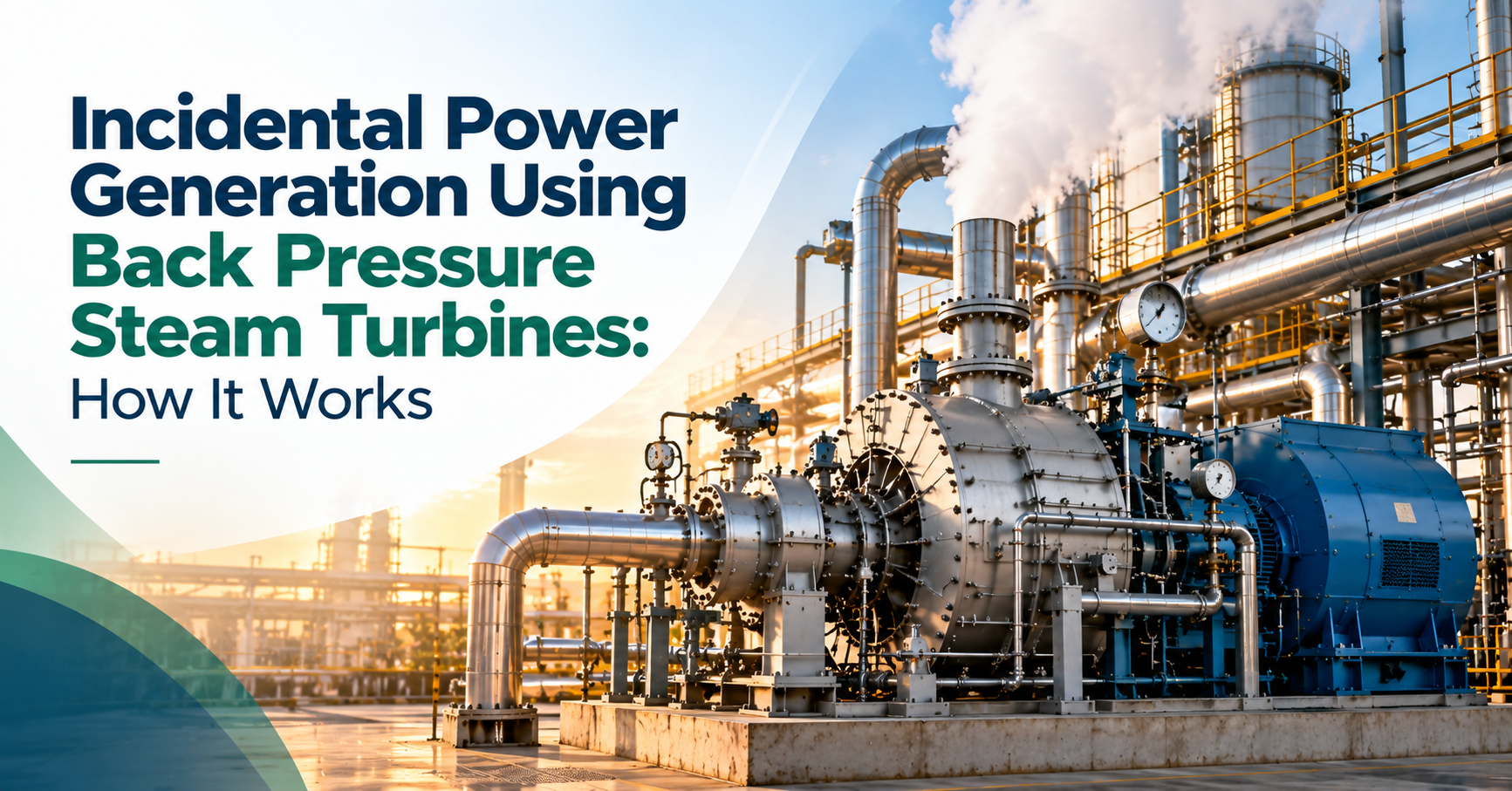
Industries that use steam for manufacturing processes often focus primarily on meeting their thermal energy requirements. However, many plants unknowingly possess an opportunity to generate electricity from the pressure energy already available in their steam systems. This concept is known as incidental power generation.
By using a back pressure steam turbine, industries can convert excess steam pressure into useful electrical or mechanical power while continuing to supply steam to downstream processes. This approach enables factories to make better use of available energy without changing their core production operations.
As industries continue to seek ways to improve energy efficiency, reduce operating costs and maximise resource utilisation, incidental power generation using back pressure steam turbines has become an attractive option for process industries such as food processing, chemicals, textiles, paper, pharmaceuticals, sugar, distilleries and other steam-intensive sectors.
For companies planning integrated steam and energy systems, experienced Industrial Boiler Manufacturers in India can help evaluate both steam generation and power recovery opportunities.
What Is Incidental Power Generation?
Incidental power generation refers to the production of electricity as a secondary benefit of an industrial process rather than as the primary objective.
In many factories, high-pressure steam generated by boilers is reduced to lower pressure before being used in production processes. Traditionally, this pressure reduction is carried out using pressure reducing valves (PRVs).
However, pressure reduction also represents an energy opportunity.
Instead of simply dissipating pressure through a valve, a back pressure steam turbine can be installed to convert a portion of that steam energy into electricity or mechanical power.
The process continues to receive steam at the required pressure, while the plant gains additional power generation as a by-product.
This is why it is called “incidental” power generation—the plant is already generating steam for process use, and electricity is produced incidentally during pressure reduction.
How Does a Back Pressure Steam Turbine Work?
A back pressure steam turbine operates by allowing high-pressure steam to expand through turbine stages.
The steam passes through stationary and rotating blades, causing the turbine shaft to rotate. The shaft can then drive:
- An electrical generator
- Pumps
- Compressors
- Fans
- Mechanical equipment
Unlike a condensing steam turbine, a back pressure turbine does not exhaust steam into a condenser.
Instead, steam exits the turbine at a controlled pressure and is supplied to industrial processes requiring medium- or low-pressure steam.
The basic energy flow is:
Boiler → High-Pressure Steam → Back Pressure Steam Turbine → Electricity Generation → Process Steam → Condensate Recovery
Plants looking to integrate turbines into existing steam systems can explore Packaging Steam Turbines designed for industrial applications.
Why Do Industries Use Pressure Reducing Valves?
Many factories generate steam at high pressure because:
- Boilers operate more efficiently at higher pressures.
- Steam distribution losses can be reduced.
- Different processes require different pressure levels.
- Power generation opportunities may exist.
A process may require steam at:
- 2 bar
- 4 bar
- 6 bar
But the boiler may produce steam at:
- 10 bar
- 17 bar
- 24 bar
Conventionally, pressure reducing valves lower the steam pressure before it reaches the process.
While simple and reliable, pressure reducing valves do not recover the available pressure energy.
A back pressure steam turbine can replace or supplement the pressure reduction system and generate electricity during the pressure drop.
How Is Electricity Generated From Process Steam?
The principle is relatively straightforward.
High-pressure steam contains:
- Thermal energy
- Pressure energy
When steam expands through a turbine:
- Pressure decreases
- Steam velocity increases
- Turbine blades rotate
- Mechanical power is generated
- A generator produces electricity
After expansion, the exhaust steam remains available for industrial use.
This allows industries to obtain:
✔ Process steam
✔ Electrical power
✔ Improved energy utilisation
This approach is commonly used in industries where steam demand remains relatively stable throughout the year.
Advantages of Incidental Power Generation
1. Better Energy Utilisation
Instead of wasting pressure energy through valves, plants can recover useful power.
2. Reduced Electricity Purchases
Generated electricity can supplement plant power demand.
3. Improved Overall Plant Efficiency
Back pressure turbines can improve total energy utilisation when both thermal and electrical energy are required.
4. Suitable for Continuous Industries
Industries with continuous steam demand often have greater opportunities for power recovery.
5. Supports Captive Power Generation
A turbine can become part of a broader captive power strategy.
For industries seeking complete energy systems, Process Heat & Power Solutions can help integrate boilers, steam systems and power recovery technologies.
Which Industries Can Benefit?
Industries with substantial steam consumption are often suitable candidates for incidental power generation.
Examples include:
- Food processing plants
- Sugar mills
- Distilleries
- Paper mills
- Textile industries
- Chemical plants
- Pharmaceutical industries
- Breweries
- Dairy processing units
- Agro-processing facilities
Any plant that:
- Produces high-pressure steam
- Uses lower-pressure process steam
- Operates for long hours
may have opportunities for steam-based power generation.
How Much Power Can Be Generated?
The amount of power generated depends on:
- Steam pressure
- Steam temperature
- Steam flow rate
- Exhaust pressure
- Operating hours
- Turbine efficiency
Higher pressure differences generally offer greater power generation potential.
A technical assessment should always be conducted before selecting a turbine.
An experienced Industrial Boiler Manufacturer in India can evaluate steam conditions, process requirements and turbine suitability.
Back Pressure Steam Turbine vs Pressure Reducing Valve
| Parameter | Pressure Reducing Valve | Back Pressure Steam Turbine |
| Pressure reduction | Yes | Yes |
| Electricity generation | No | Yes |
| Process steam supply | Yes | Yes |
| Energy recovery | No | Yes |
| Mechanical output | No | Yes |
| Overall energy utilisation | Lower | Higher |
The choice depends on economics, steam demand and operating conditions.
Integration With Modern Industrial Energy Systems
Many industries are now looking beyond traditional steam systems.
An integrated industrial energy system may include:
- Boilers
- Steam turbines
- Waste heat recovery
- Condensate recovery
- Biomass systems
- Biogas plants
- Waste-to-energy technologies
For example, industries generating organic waste may evaluate a Biomethanation Plant to convert food waste into biogas.
Industries managing plastic waste may consider a Plastic Gasification Plant for suitable waste-to-energy applications.
These technologies complement steam and power systems by improving overall resource utilisation.
How to Select a Back Pressure Steam Turbine
Before selecting a turbine, engineers should evaluate:
Steam Parameters
- Pressure
- Temperature
- Flow rate
Process Requirements
- Exhaust pressure
- Steam quantity
- Operating profile
Power Requirement
- Required electrical output
- Grid interaction
- Captive power needs
Operating Hours
Continuous operation generally improves project viability.
Future Expansion
Consider future increases in steam demand.
A properly engineered system should optimise both process steam supply and power generation.
Packaged Steam Turbines for Industrial Applications
Modern packaged steam turbines simplify installation by integrating:
- Turbine
- Gearbox
- Generator
- Controls
- Auxiliary systems
Daack Vessels offers Packaging Steam Turbines designed for industrial applications including:
- Captive power generation
- Process industries
- Cogeneration systems
- Steam energy recovery
- Industrial energy optimisation
When selecting a steam turbine manufacturer, industries should consider:
- Technical expertise
- Steam system knowledge
- Integration capability
- Service support
- Application experience
Future of Incidental Power Generation
As industries focus on energy efficiency and sustainable operations, recovering useful power from existing steam systems will continue to gain importance.
Incidental power generation using back pressure steam turbines enables industries to:
- Improve energy utilisation
- Generate electricity
- Support captive power
- Reduce dependence on external power
- Make better use of existing steam systems
For plants already generating high-pressure steam, recovering pressure energy through a turbine may provide an opportunity to improve overall system performance.
Conclusion
Incidental power generation using back pressure steam turbines is an effective way to recover useful energy from industrial steam systems.
Instead of wasting pressure energy through conventional pressure reducing valves, industries can generate electricity while continuing to supply steam to production processes.
This approach can improve overall plant efficiency, support captive power generation and optimise steam utilisation.
For industries evaluating steam-based power generation, working with experienced Industrial Boiler Manufacturers in India and providers of Packaging Steam Turbines can help determine the most suitable solution based on process requirements and operating conditions.
Frequently Asked Questions
What is incidental power generation?
Incidental power generation is the production of electricity as a secondary benefit of an industrial process, often by recovering energy from steam pressure reduction.
How does a back pressure steam turbine generate electricity?
High-pressure steam expands through turbine blades, rotating a shaft connected to a generator, while the exhaust steam remains available for industrial use.
Can process steam generate electricity?
Yes. Process steam can generate electricity when pressure energy is recovered using a back pressure steam turbine.
Which industries can use back pressure steam turbines?
Food processing, sugar, chemicals, pharmaceuticals, textiles, paper, distilleries and other steam-intensive industries commonly use back pressure turbines.
What is the difference between a pressure reducing valve and a back pressure steam turbine?
A pressure reducing valve lowers steam pressure without recovering energy, while a back pressure turbine reduces pressure and generates electricity.